Skip to content

For custom clothiers, bespoke and made to measure shops

CRM for tailors and custom clothiers

A CRM for tailors keeps every client's fit notes, cloth preferences, occasions and past commissions in one place, and tells you each morning who is due for a pickup call, a thank you or the next suit. Clientele reads your sales history, ranks clients by the value of the next order and drafts the message for you to send.

  • A daily list of clients ready for a reorder
  • Fit notes, cloth taste and wedding dates on one profile
  • Texts from the shop number, with consent per channel
Client list
Sample list

No account needed Sample clients are invented Uploads are deleted after 24 hours Download sample CSV

Try it with the sample shop or upload a CSV of up to 200 clients from your POS or invoicing tool.

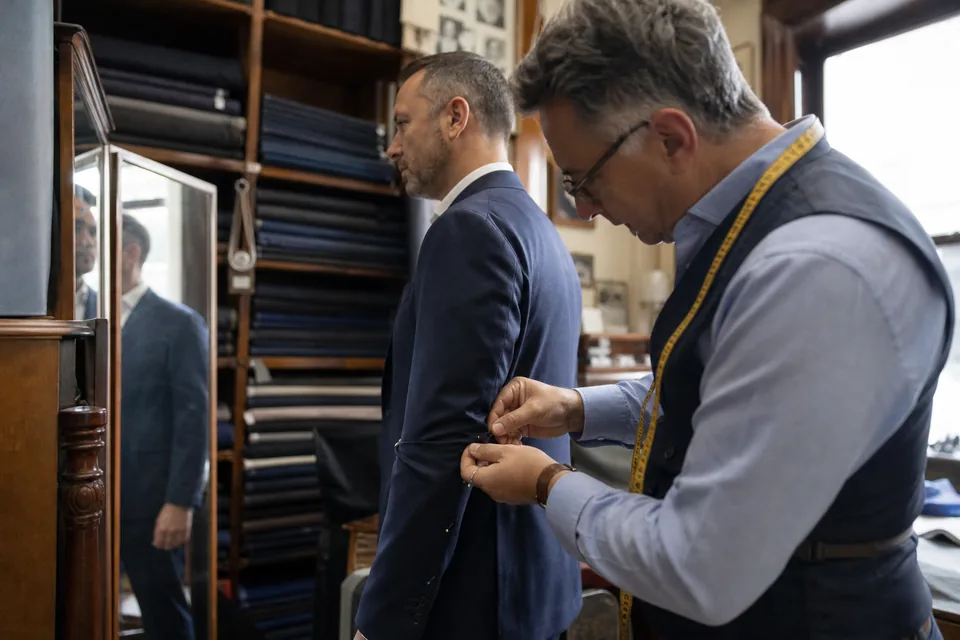
Custom clothier pinning the sleeve of a suit jacket on a client during a fitting in a tailor shop

Where tailoring shops lose the second order

The first suit is the expensive sale. The next four should be easy

By the final fitting you know a client better than any retailer ever will: his pattern, his posture, the cloth he reached for first, the wedding the suit was for. Then he walks out with a garment bag, and whether he orders again depends on him remembering you at the right moment.

Most shops mean to follow up. The cutter is at the table, the owner is with a groom and his five groomsmen, and the list of people worth a call lives in a paper book nobody opens in the busy season. A general CRM built for sales pipelines does not help, because a tailor has no pipeline. He has a few hundred clients who each buy again on their own clock.

The Money Feed in a tailor shop

A tailor shop CRM that tells you whom to call before the first fitting of the day

Each morning everyone who sells in your shop opens Clientele and sees a short list: who to contact, why today, what the order could be worth and a drafted message in their own voice. You read it, change a word if you like, and send it from the shop number. It takes about ten minutes.

The list is ranked by value. The client who orders two suits a year comes before the one who had trousers hemmed. You set the rules once, such as how many days after pickup to say thank you and how many quiet months make a good client worth a call.

New cloth

Seasonal cloth matched to clients

Tag a new bunch as flannel, linen or tweed. Clients who ordered the same kind of cloth before appear in the feed with the reason spelled out.

Occasion

Weddings and big dates

A wedding date, a gala or a new job goes on the profile. Clientele counts back the weeks you need for fittings and flags the client in time.

After pickup

The note after the pickup

A few days after a client collects a garment, a personal thank you. It is also when he tells you about the trousers he wants taken in.

Ready

Alterations and pickups

Finished alterations and garments waiting on the rail become a prompt, so nothing hangs in the back for a month.

Next piece

From one suit to a wardrobe

A client with one navy suit is a natural fit for shirts, a second pair of trousers or a sport coat. The feed suggests the step that fits his history.

Gone quiet

Good clients who drifted

Someone who ordered every year and has not been in for 14 months gets a reason to come back that is not a discount.

What a custom clothier CRM should remember

An invoice says a client paid $2,400 for a two piece suit. It does not say that he carries his right shoulder low, prefers a 1.5 inch cuff, will not wear anything with sheen, ordered the suit for his daughter's wedding in June and mentioned a sport coat for the fall. That is the information that sells the next garment, and in most shops it lives in one cutter's head.

Clientele keeps it on one client profile: every purchase from your POS or invoicing export, clothing and shoe sizes, favorite cloths, colors and styles as tags, fit notes anyone can add in a few seconds, important dates, household members and the full message history. Your pattern measurements can stay in the system that runs your workroom. See how client profiles for retail teams are laid out.

  • Fit and posture notes visible before the client arrives
  • Cloth, color and style preferences as searchable tags
  • Wedding dates, anniversaries and birthdays with a lead time
  • VIP score from 0 to 100, so your best clients are never forgotten
  • Consent per channel with date and source
Paper measurement card, fabric swatch book and a phone on a tailor's cutting table

Setup

How a tailoring business gets started in one afternoon

There is no consultant and no implementation fee. Most shops import their clients after closing and open their first Money Feed the next morning.

  1. 01

    Export your sales

    Download clients and invoices as a CSV from your POS, invoicing or order tool. If you sell online through Shopify, connect it.

  2. 02

    Map columns once

    Tell Clientele which column is the client, the garment, the price and the date. The mapping is saved for the next import.

  3. 03

    Set your timing

    Days after pickup for a thank you, months before a regular counts as quiet, weeks of lead time before a wedding. Defaults are filled in.

  4. 04

    Invite the shop

    Each clothier gets a feed on the phone. The owner sees every feed and which messages turned into orders.

Software for tailors compared honestly

Tailoring shops usually pick from four kinds of tools. They solve different problems, and a busy shop often runs two of them.

Kinds of customer software tailor shops and custom clothiers use

Main job

Paper cards and a spreadsheet
Record measurements and orders
Tailoring order and measurement app
Work orders, pattern measurements, due dates
General sales CRM
Deals and pipelines, built by you
Clienteling platform such as Clientele
Bring existing clients back for the next garment

Pattern measurements and cutting tickets

Paper cards and a spreadsheet
Yes, by hand
Tailoring order and measurement app
Yes, this is what it is for
General sales CRM
Custom fields you set up
Clienteling platform such as Clientele
No. Sizes and fit notes only

Daily list of whom to contact

Paper cards and a spreadsheet
No
Tailoring order and measurement app
Rarely
General sales CRM
If you build it
Clienteling platform such as Clientele
Yes, ranked by order value for each person

Occasions with lead time

Paper cards and a spreadsheet
A note in the margin
Tailoring order and measurement app
Order due dates
General sales CRM
Tasks you create
Clienteling platform such as Clientele
Dates on the profile, flagged weeks ahead

Personal texts from the shop number

Paper cards and a spreadsheet
Personal phones
Tailoring order and measurement app
Order status alerts in some
General sales CRM
Add on
Clienteling platform such as Clientele
WhatsApp, SMS and email in one inbox

Best for

Paper cards and a spreadsheet
A solo tailor starting out
Tailoring order and measurement app
The workroom
General sales CRM
B2B sales teams
Clienteling platform such as Clientele
Shops where repeat clients drive the year

If your main problem is losing track of work orders, buy a tailoring order app first. If the workroom runs fine and the problem is that good clients do not come back often enough, that is the job Clientele does. An alterations only shop with walk in traffic will get less from it than a clothier whose average order runs to four figures.

Custom clothier at the shop counter messaging a client on a phone beside finished suits ready for pickup

Who it fits

Clientele suits businesses where one client is worth many garments: bespoke tailors, made to measure and custom suit shops, traveling clothiers who see clients at the office, custom shirtmakers, and menswear stores with an in house tailor. Shops that also sell ready to wear use it the same way as a boutique CRM, and larger fashion houses run it as a fashion CRM across advisors.

Traveling clothiers get one more benefit. The client book belongs to the business, so when a salesperson moves on, the clients, notes and message threads are reassigned in a click instead of leaving in someone's phone.

What it costs

Boutique is $99 a month billed yearly, or $199 month to month, for up to 3 people in one shop and 2,500 client profiles. Brand is $299 a month billed yearly for up to 15 people across 3 locations and 15,000 profiles, with manager views and sales attribution per associate. Every plan includes the Money Feed, client profiles, the shared inbox and CSV import. The full breakdown is on the clienteling software pricing page, and you can run the demo above on your own export first.

FAQ

CRM questions tailors and clothiers ask before they buy

What is the best CRM for tailors?

The best CRM for tailors is one that knows a tailoring client is worth several garments over many years. It should keep fit notes and cloth preferences on the client, remind you about pickups and wedding dates, and tell you each morning who is due for a reorder. Clientele does that from $99 a month billed yearly.

What software do tailors use?

Most tailor shops run three things: a point of sale or invoicing tool, a measurement and work order app or paper cards for production, and a phone full of client texts. A CRM is the missing fourth piece. It sits on top of the sales history and decides whom to contact today, so follow up stops depending on memory.

How do tailors keep track of customer measurements?

Tailors usually keep measurements on paper cards, in a spreadsheet or in a measurement app tied to work orders. Clientele keeps the selling side next to them: clothing and shoe sizes as fields, plus fit notes such as a dropped right shoulder or a preferred trouser break as notes on the client profile, visible before the client walks in.

How much does a CRM for a tailor shop cost?

Clientele's Boutique plan is $99 a month billed yearly, or $199 month to month, for up to 3 people in 1 shop and 2,500 client profiles. Brand is $299 a month billed yearly for up to 15 people across 3 locations. One reordered suit usually covers several months of the subscription.

How do tailors get repeat customers?

Repeat tailoring business comes from timing. A client who had a suit made is most likely to order again when the season turns, when new cloth arrives in a weight he liked, or before a wedding, a new job or an anniversary. Shops that contact clients at those moments, personally, sell more garments per client than shops that wait.

Can a CRM replace my tailoring order software?

No, and it should not try. Keep the tool that runs your cutting tickets, pattern measurements and workroom schedule. Clientele does not manage production. It imports the sales those orders create and handles what comes after the pickup: thank you notes, reorder timing, occasions and the clients who have gone quiet.

See which clients are due for their next garment

Upload a client and sales export from your invoicing tool or POS, or start with our sample shop. In under a minute you see who to contact first, the reason, what the order could be worth and a message written for each client.

Plans from $99 a month billed yearly. Subscriptions only, cancel at the end of any period.