Skip to content

For watch dealers

CRM for watch dealers and boutiques

A CRM for watch dealers remembers every collector's wrist size, the references they own and want, and when each watch is due for service. Clientele turns that into a daily list: who asked for the reference that just arrived, whose service is due, and a message ready to send.

  • Reference wishlists that surface the moment a piece arrives
  • Service dates per watch, with a booking message drafted
  • Upgrade conversations three years after the last watch
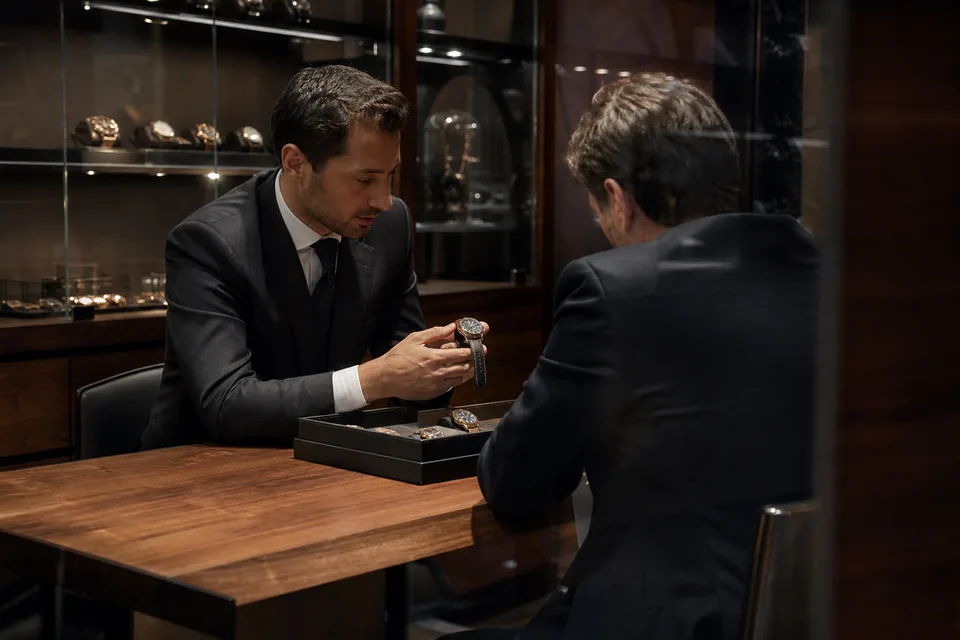
Watch dealer presenting a mechanical watch to a collector at a wooden counter in a watch boutique

The watch business runs on memory

A watch dealer's best clients are collectors. They own several pieces, follow new references closely, and remember which boutique called them first when something hard to find came in. Their loyalty is earned one allocation and one service visit at a time.

In most boutiques the list of who asked for what lives in a notebook behind the counter or in the head of the manager. It works until the manager is on holiday, the notebook is out of date, or a collector who asked two years ago hears that a newer client got the piece. A CRM for watch dealers puts that list where everyone can see it and ties it to each collector's full history.

Reasons a watch boutique calls

What puts a collector in tomorrow's Money Feed

Reference arrived

A wanted reference comes in

When a reference on a collector's wishlist is marked back in stock or its price changes, everyone who asked appears with the value of the piece and a message offering a private look.

Service due

Service intervals

A service date on the profile brings the client back into the feed when it falls due, with a short note to book the visit and collect the watch.

Last watch 3 years ago

The next piece

Three years after a client's last watch, an upgrade reason appears, valued from their average ticket and suggesting a reference that fits their taste tags.

Fits his collection

New references that match

New arrivals tagged by material, complication and size are matched to collectors with the same tags, such as a titanium diver for a client who buys sports watches.

Birthday in 5 days

Birthdays and milestones

Dates for the client and the people they buy for: a graduation watch for a son, an anniversary piece for a partner.

Purchased 2 days ago

After the sale

A thank you note two days after a purchase, with care advice for the movement, sets up the next conversation.

A collector profile built for watches

The same profile structure as every Clientele client, filled with the details a watch advisor needs.

What a watch dealer records on a Clientele profile

Wrist size

Example
17.5 cm, prefers 38 to 40 mm cases
How it is used
Suggestions stay within what he wears

Owned references

Example
Purchases with date and amount
How it is used
No suggestion of a piece he already owns

Wanted references

Example
Wishlist with date asked
How it is used
Surfaces when the reference arrives

Taste tags

Example
Steel, green dial, chronograph, GMT
How it is used
Matches new arrivals to collectors

Service dates

Example
Dress watch service due in March
How it is used
Service reason in the feed

Household

Example
Son, graduation in June
How it is used
Gift ideas at the right moment

Allocations you can explain

Allocation is the most sensitive conversation a watch boutique has. Clientele does not decide who gets a piece, and it should not: that is a relationship call. What it does is put every relevant fact in front of the person who decides.

  1. The reference arrives and is marked in stock.
  2. Every collector who asked for it appears in the feed of their advisor, with VIP score, number of watches owned, lifetime value and when they asked.
  3. The manager chooses who is offered the piece first and notes why on the profile.
  4. The advisor sends the drafted invitation; the others receive a personal update instead of silence.

Months later, when a collector asks why someone else got the last one, the answer is on record. And because every sale after a message is credited to the advisor who sent it, managers can see which advisors convert allocation calls into long relationships. Read more about clienteling sales attribution.

Service visits that sell

A mechanical watch needs servicing every few years, and most owners forget until it runs slow. A reminder from the boutique that sold it is good service and good business: the client returns to the store, the advisor shows what is new, and a watch that would have gone to an independent workshop stays with you.

When the watch is ready, the pickup message goes out on the channel the client consented to, and the advisor sees the references that match the client's taste before he walks in.

Messages in a collector's language

Collectors notice generic copy. Every draft in Clientele names the reference, the reason and an easy next step, in the store's tone and, on paid plans, in the advisor's own voice through AI clienteling. The advisor reads, adjusts and sends; nothing goes out automatically.

Clientele works next to the POS you use for stock and service tickets. Try the clienteling software demo with the sample watch boutique, then compare plans on the pricing page.

FAQ

Questions from watch dealers and boutique managers

What should a CRM for watch dealers track?

Wrist size, references owned with purchase dates, references wanted, preferred case materials and sizes, complications the collector likes, service dates and the people they buy for. Clientele keeps all of it on one profile and uses it to decide which collectors hear from you when a piece arrives.

How does Clientele help with allocations?

Each collector's wanted references sit on their wishlist. When a reference comes in and is marked back in stock, every client who asked for it appears in the Money Feed with their VIP score, purchase history and a drafted message. The boutique still decides who is offered the piece; Clientele makes sure nobody who asked is forgotten and that the choice is recorded.

Can it remind clients about watch servicing?

Yes. Add a service date to the profile when a watch is sold or serviced, and the client appears in the feed with a service reason when it falls due, with a message to book the visit. A service visit is also the natural moment to show the new references.

When does an upgrade conversation come up for a watch client?

For watch boutiques the feed raises an upgrade reason three years after a client's last watch purchase, with the value based on their average ticket. You decide whether to act on it; many collectors are ready for the next piece well before anyone asks.

Does it work with our watch POS or e-commerce site?

Every plan imports CSV exports from any point of sale and syncs Shopify. Brand and higher plans add POS connectors and e-commerce webhooks, so a sale appears on the client profile without a manual export.

What does it cost for a watch boutique?

A single boutique with up to 3 advisors fits Boutique at $99 a month billed yearly. A dealer with up to 3 stores and 15 advisors uses Brand at $299 a month billed yearly, which adds POS connectors, sales attribution and a manager view of every book.

See which collectors to call this week

Upload a client export from your watch POS or use our sample watch boutique. The demo ranks the first five collectors to contact, with the reason, the value and a message.

Plans from $99 a month billed yearly. Subscriptions only, cancel at the end of any period.