Clienteling defined
Clienteling is a way of selling in which the associate manages a personal book of clients and takes responsibility for the relationship over years, not for a single transaction. The associate remembers what each client owns, what they like, the sizes they wear and the dates that matter to them, and uses that knowledge to suggest the right piece at the right time.
Three elements make it clienteling rather than marketing. It is one to one: a named advisor writes to a named client. It is timely: there is a reason to get in touch now, such as an anniversary, a new arrival or a repair that is ready. And it is relevant: the suggestion fits what the client already owns and likes. Remove any of the three and you have a newsletter.
Where clienteling comes from
Long before software, the best sales associates in luxury houses kept a carnet, a small notebook of clients with their measurements, purchases and family details. A good advisor in a fashion house or a jeweler on a grand avenue could build a book of a few hundred clients who bought several times a year, and that book was worth more than any window display.
The weakness was always the same. The book belonged to the associate. When they moved to a competitor, the relationships moved too, and the store had a receipt history and nothing else. Clienteling software began as a way to keep the book in the store while still letting the associate own the relationship.
Clienteling and CRM are not the same thing
A CRM is a database of customers. Clienteling is a daily habit. The two are often confused, and that confusion explains why many retailers buy a CRM and see no change on the floor.
How a classic CRM and clienteling differ
Main user
- Classic CRM
- Marketing and head office
- Clienteling
- The associate on the floor
Unit of work
- Classic CRM
- Segment or campaign
- Clienteling
- One client, one conversation
Trigger
- Classic CRM
- A calendar of campaigns
- Clienteling
- A reason tied to the client
Message
- Classic CRM
- Same text for thousands
- Clienteling
- Written for one person
Success measure
- Classic CRM
- Open and click rates
- Clienteling
- Revenue influenced per associate
Where it lives
- Classic CRM
- Desktop dashboards
- Clienteling
- The associate's phone
| Classic CRM | Clienteling | |
|---|---|---|
| Main user | Marketing and head office | The associate on the floor |
| Unit of work | Segment or campaign | One client, one conversation |
| Trigger | A calendar of campaigns | A reason tied to the client |
| Message | Same text for thousands | Written for one person |
| Success measure | Open and click rates | Revenue influenced per associate |
| Where it lives | Desktop dashboards | The associate's phone |
A good retail CRM software for a high ticket store therefore has to do more than store records. It has to turn the records into a short list of people to contact today and make the contact easy.
How clienteling works day to day
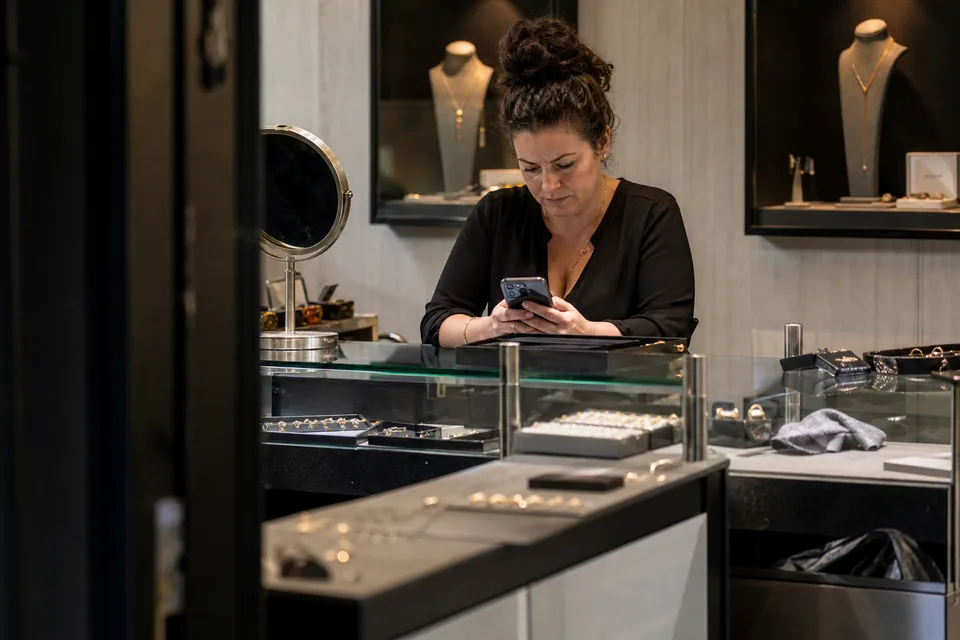
In a store that clientels well, the day starts with a list. Each associate knows which five to fifteen clients deserve a message today and why. They send a few messages before opening, book one or two private appointments, and prepare the pieces for those visits. During the day they capture what they learn: a size, a gift recipient, a piece the client admired but did not buy. After a sale they write a thank you note within two days.
The hard part has never been the message itself. It is deciding who comes first among hundreds of clients, and remembering the details at the right moment. That is the part software should do. In Clientele it is the job of the Money Feed, a ranked morning list with the reason, the opportunity value and a drafted message for every client on it.
Clienteling examples by vertical
Fine jewelry
A week before a wedding anniversary the associate invites the client to see eternity bands in her ring size and metal. Five years after an engagement ring, the couple hears about an upgrade with trade in credit. When a resized ring is ready, the pickup message mentions the matching earrings. More on jewelry CRM.
Watches
Collectors on a wishlist for a sought after reference hear first when an allocation arrives, in the order the boutique decides. Owners of a mechanical watch get a reminder when the service interval comes up.
Fashion
When a new collection drops, the advisor holds pieces in each top client's size and invites them to a private appointment before the floor is set. Alterations ready triggers a pickup message and a styling suggestion.
Beyond retail
Car dealerships use the same practice around lease ends and service dates, aesthetic clinics around treatment cycles, private banks around life events and hotels around returning guests and their preferences.
Digital clienteling and consent
Most clienteling now happens in messages rather than phone calls: WhatsApp, SMS and email, often from the associate's own phone. That is efficient and also risky. Personal phones mean the store loses the conversation history, and messages sent without a record of consent can breach privacy rules in many markets.
Good practice is simple. Record consent per channel with the date and the source, send only on channels with consent, keep every message on the client profile, and respect quiet hours. Clientele enforces all four. Read more about digital clienteling.
How to measure clienteling
Clienteling is easy to praise and hard to prove, which is why programs fade after the launch. Three numbers keep it honest.
- Outreach per associate per week. If it falls, the habit is fading.
- Coverage. The share of top clients contacted in the last 90 days.
- Revenue influenced. Sales from clients within a window, often 14 or 30 days, after a personal message, credited to the associate who sent it.
Track them per associate and per reason, and the program improves itself: you learn which moments convert in your store and do more of them.
How to start with a small team
- Export your clients and purchases from the point of sale or online store.
- Assign every client to one associate, so ownership is clear.
- Agree on a small daily target, five clients per associate is enough to start.
- Capture one new fact per visit: a size, a date, a preference.
- Review revenue influenced every month and celebrate the associates who lead.
You can do this with a notebook and discipline. Clienteling software like Clientele makes it a habit by doing the ranking, the reminders and the first draft for you.