Clienteling examples jewelers use to bring clients back
See who your store should contact today, with a sample boutique or your own CSV
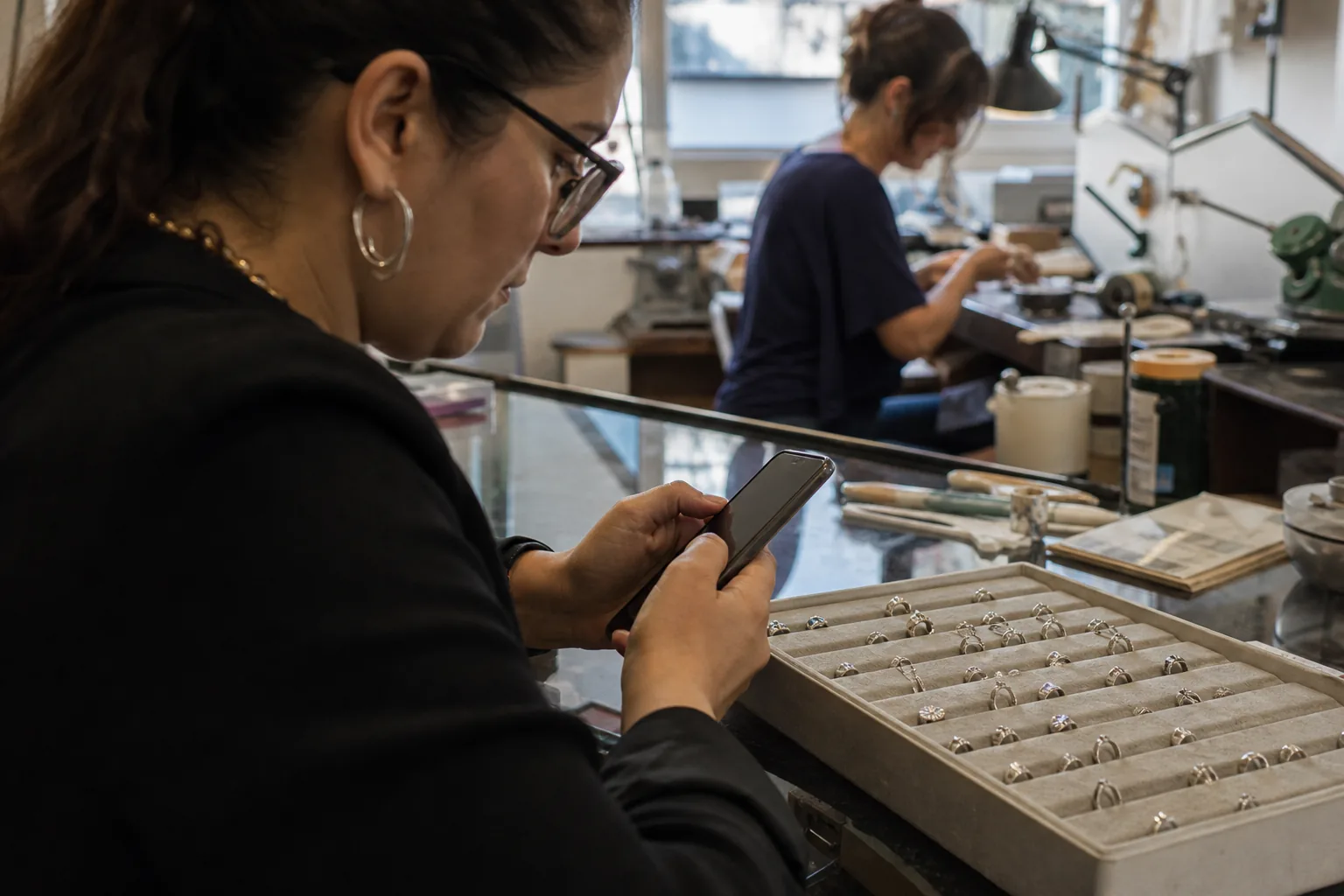
The best clienteling examples for jewelers are short, personal messages tied to a real reason: a thank you after a purchase, a birthday or anniversary, a new piece that matches what the client already owns, a wishlist item back in stock, a repair ready, or an upgrade window. Below are twelve messages you can adapt.
Each example comes with the moment it fits, why it works and what to change for your own store. Use them as a starting point, never as a template sent to a hundred people. The whole point of clienteling is that the client can tell the message was written for them. And send them only on a channel the client agreed to, as we explain in our guide to WhatsApp clienteling with consent done right.
Messages after a purchase
1. The thank you two or three days later
"Hi Laura, it's Anna from the boutique. Thank you again for choosing the diamond studs on Saturday. I hope your mother loves them. If she'd ever like the backs adjusted, just bring them in and we'll do it while you wait."
Why it works. It mentions who the gift was for, offers a small service and asks for nothing. That makes the next message welcome.
2. The fit check about a week after a ring purchase
"Hello James, Tom here. How is the ring feeling now that it's been on for a week? Fingers change size with the seasons, so if it feels a little loose or tight, we'll resize it for you, no charge."
Why it works. It shows care after the sale and catches a problem before it becomes a complaint. Clients remember the jeweler who checked in.
3. The care note around a month later
"Hi Priya, a quick note from Anna. Pearls love to be worn, but they don't love perfume. Put them on last, and when you're in next, we'll give them a complimentary clean and check the knotting."
Why it works. It is useful advice, and it plants a reason to visit again.
Messages for dates that matter
4. The birthday note a week before
"Hello Mrs Novak, it's Daniel. I believe your birthday is coming up next week, so happy early birthday. If you'd like to treat yourself, I've set aside two pieces I think you'd love, in the yellow gold you always choose. Happy to send a photo."
Why it works. A week before gives time to visit. Mentioning her preferred metal proves the note is personal.
5. The partner's reminder before an anniversary
"Hi Mark, Sophie here. Your anniversary is on the 14th, if my notes are right. Last year you chose the sapphire pendant. If you're thinking about something this year, the matching earrings are in, and I can have them wrapped and ready for you."
Why it works. It solves a real problem for the client, who is busy and might forget, and it builds on the previous gift instead of starting over.
6. The engagement anniversary upgrade window
"Hello Elena, it's Tom. It's been five years since you and Pablo chose your engagement ring with us, which is lovely to think about. Many couples mark the moment with an eternity band or a reset. If you'd ever like to try a few on together, I'd be glad to host you."
Why it works. Upgrade conversations are natural around milestones. The tone is celebratory, not salesy, and the offer is an experience.
Messages about pieces
7. A new arrival that matches what they own
"Hi Claire, Marta here. The new collection arrived this morning, and there's a pair of emerald drops that would sit beautifully with the emerald ring you chose last spring. Shall I send you a photo, or put them aside until Saturday?"
Why it works. It connects the new piece to the client's own history, which is the core of clienteling. Two easy options make replying simple.
8. A wishlist piece is back
"Good news, Hannah. The rose gold tennis bracelet you asked about in March is back in your size. I can hold it for you until Friday if you'd like to come and try it."
Why it works. The client asked for this. A hold with a date creates gentle urgency without discounts.
9. A private viewing invitation
"Hello Mr Okafor, it's Daniel. We have a small private viewing of one of a kind pieces on Thursday evening, just a few clients. Given your interest in unusual coloured stones, I'd love you to be there. Would 6 or 7 pm suit you better?"
Why it works. Exclusivity is real when the guest list is small and the reason for the invitation is specific.
Messages that bring quiet clients back
10. The gentle check in after a long gap
"Hi Sarah, it's Anna from the boutique. It's been a while, and I hope you're well. We've just had some new stacking rings in that reminded me of the ones you bought for your sister. No need to reply, but if you're passing, come and say hello."
Why it works. It references shared history, removes pressure and leaves the door open. Many jewelers use a gap of around six months after a high ticket purchase as the moment for this kind of note.
11. The repair is ready
"Hello Mr Rossi, Tom here. Your watch is back from service and keeping perfect time. We're open until 7 pm every weekday and until 5 on Saturday. Would you like me to hold it at the front desk for you?"
Why it works. Service visits are a natural moment to reconnect in person, and many conversations about the next piece start at the collection counter.
12. The service due reminder
"Hi Olivia, Sophie here. It's been about two years since we last checked the claws on your engagement ring. A quick inspection keeps the stone secure, and it's complimentary. Would you like to pop in next week?"
Why it works. It protects something the client cares about, and it is a real service, not a pretext.
What these messages have in common
- A named sender. Every message comes from a person, not "the team".
- A specific reason. A date, a past purchase, a request, a repair. Never "just checking in" without context.
- One offer. Come and see, reserve, collect, attend. Not three options and a link to the whole catalogue.
- No discounts. Luxury clients respond to attention and access, not to percentages off.
- Short enough to read at a glance. Two to four sentences on WhatsApp or SMS, a little longer by email.
How to send the right message to the right client every day
Writing one good message is easy. Knowing which twelve clients deserve one this morning, across every associate's book, is the hard part. That is what clienteling software should solve.
In Clientele, each associate opens the Money Feed and sees a short list of clients from their own book, ranked, each with the reason (birthday next week, new arrival matches past purchases, wishlist item back, repair ready, long gap since the last visit), an estimated opportunity value and a drafted message. The drafts are written in the associate's own voice by our AI messages feature, and the associate edits and sends them on the channel the client agreed to. When the client buys afterwards, sales attribution credits the associate who reached out.
The fields behind those reasons, such as ring size, preferred metals, stones and important dates, live on the client profile. If you are setting that up, read how to build a client book for jewelry and watch boutiques, and see how it works for jewelers on our jewelry CRM page.
Try it with your own clients
Pick three of the messages above, adapt them to your store's voice and send them this week to clients who agreed to hear from you. Then watch who replies. If you want the list and the drafts prepared for you every morning, upload a client list or use our sample jewelry boutique on the Clientele home page, or compare plans on the pricing page.